10 Tips For Learning Astrology

1. Get A Copy of Your Birth Chart
First things first- go to www.astro.com and get a copy of your birth chart. A “birth chart” or “natal chart” is a diagram which reflects the positions of the planets at the moment that an individual is born. This chart is the fundamental basis of everything that astrologers do, so obtaining a copy of your own birth chart obviously needs to be your first step. Astro.com is a very important website because they offer a number of free services for astrologers, including free chart calculation.
Go to astro.com and then go to their free horoscopes or free charts section. Towards the bottom right 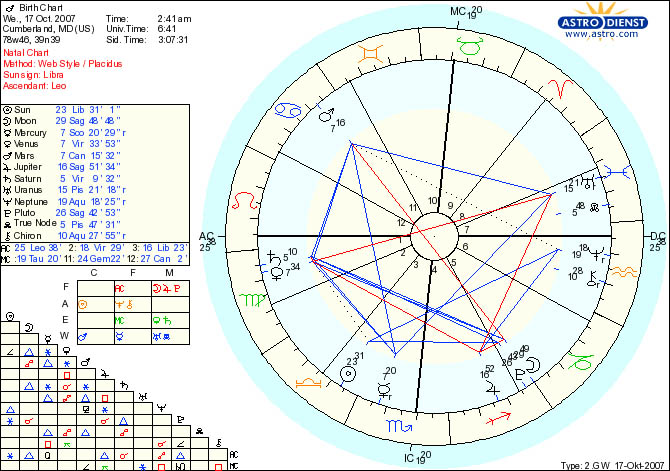
Ok, so now you should have your birth chart. Look it over and become familiar with it. Get to know what all of the different positions in the chart are, and memorize the different symbols or “glyphs” for the planets, signs and aspects. Here is a useful page which you can use to get started in learning the astrological symbols.
2. Make Use of Free Resources
The next step once you have your birth chart is to start trying to interpret it, in order to figure out what it actually means. In order to do this you are going to need some help. The best thing to do at this early stage is to start looking around the internet for free resources that you can use in order to learn about the chart and in order to provide you with some interpretations of it.
I cannot stress enough how valuable of a resource astro.com is in this area. In their “free horoscopes” section they have some great stuff such as the “astro click portrait” and the “personal portrait” which provide some useful free interpretations of your natal chart. Astro.com also has some introductory articles on astrology, including stuff on the planets, signs, and aspects.
There are also a number of other free resources available in various places on the net, although sometimes the decent information can be hard to find.
- Wikipedia’s article on astrology is in pretty good shape, although some of the other astrology related articles on Wikipedia are in pretty bad shape, so be cautious.
- Skyscript.co.uk provides a lot of excellent articles and information on more traditional forms of astrology.
- The Mountain Astrologer’s Beginner’s Series provides a wide range of different articles on basic topics that are excerpted from their popular astrological magazine.
- Matrix software’s astrology 101 provides a nice overview of different areas of the subject.
You may also want to check out some of the following articles that I’ve written here on my blog:
- Video on the history of western astrology
- Video tutorial on how to draw the astrological glyphs
- The concept of sect
- Whole sign houses
- Benefic and malefic planets
- The difference between the tropical and sidereal zodiacs
In the end, while there are a lot of websites out there on astrology, it is often important to be discerning when you are searching the internet for this type of information because there is a lot of junk out there.
3. Get Lots of Books, Read Voraciously
When it comes down to it, there really isn’t that much good information available online when it
So, amassing a sizable library tends to be a must when it comes to studying astrology. Usually it is safest to start off with some basic introductory books, and then work your way up to the more advanced stuff. Here are some of useful introductory books for getting started in astrology:


Once you get some of the basics down you can start getting into more specific or advanced areas of astrology. I wrote an annotated book list for beginner and advanced students alike on Myspace at one point, and I recently set up a store on Amazon.com which lists most of the books recommended there. David Roell at AstroAmerica.com also has an interesting list of beginners books, as well as a more detailed list that focuses on specific astrological traditions and branches.
In the end you should probably try to get as many books as you can. Unfortunately the situation is somewhat similar to the internet since there are a lot of lame pop-astrology books and other worthless junk, but there are also a lot of really great books out there as well. So, be discerning, but read as much as you can. The more widely read you are on the subject of astrology, the better your grasp of it will eventually be.
4. Follow Your Transits, Read the Ephemeris
One very useful thing that beginning students can start doing right away is following their transits and getting a general idea of where the planets are at any given time.
While the birth chart is like a snapshot of where all of the planets were when you were born, transits are the current or future positions of the planets in the sky. Obviously the positions of the planets have moved on from their original positions since you were born, and these movements have an important bearing on what will happen during the course of your life. The study of transits is one of the primary means of prediction in virtually every tradition of astrology.
The movements of the planets are usually studied using an “ephemeris,” which is a book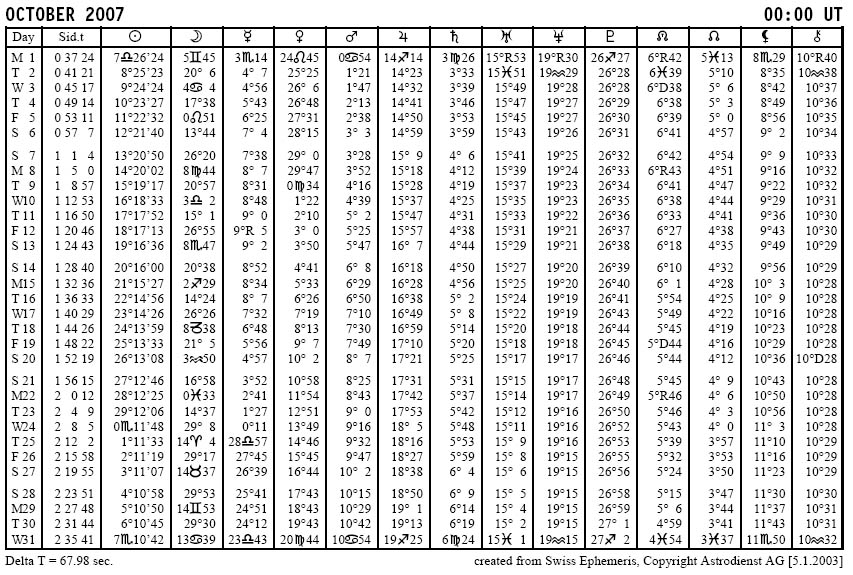
Here is a link to the pdf of the ephemeris for 2007 from astro.com. Familiarize yourself with it. Get to know what signs the planets are in and how fast they move through each of the signs. Note where certain planets are right now relative to where they were in your natal chart. Think back to important events in your life and then check the ephemeris to see where the planets were at that time.

After you follow your transits for long enough you start to get a sense for what each of the planets actually signifies or means in a chart, and how that actually plays out in real life. Eventually you can take the experiences and observations that you acquire from looking at transits and begin to apply it towards making actual predictions.
5. Study The Charts Of Your Friends And Family
Once you have gotten the basic mechanics of your own chart down and you have started to gather together interpretations and follow your transits on a daily basis, you should start going through the same process with the charts of friends and family members who you know. Make observations. Collect empirical data. See how the delineations in the books actually fit the reality of each person’s life. Follow their transits and see what happens when certain configurations occur in their chart. For example, transiting Mars conjoining their natal Mercury, or their Saturn return around the age of 29, or something similar along those lines.
Studying the biographies of famous people and comparing them with their birth chart is interesting, but the real depth and subtlety of astrology comes out when you have an intimate understanding of the person’s life who you are studying.
6. Talk With Other Astrologers Online
Sometimes students of astrology encounter problems in the early part of their studies because it can
The easiest way to meet up with some other people who are interested in astrology is to join an astrological forum online. There are lots of forums and mailing lists around the internet – the trick is just to find a good one, or at least one that you jive well with. There are quite a few to choose from:
- The Skyscript Astrology Forum is usually a pretty active and interesting forum, with a primary focus on traditional forms of astrology.
- The Astrodienst Forum just opened earlier this year and it is already off to a great start with a wide international community. The have forums in English, German, French, Spanish, Italian, Dutch, and Portugues, and it looks like they will be adding more in the future.
- Noel Tyl’s Forum is more of an old school type of forum, but it was an early favorite of mine. It has a very active community of modern astrologers posting on it, and Noel leads regular exercises with some of his students there.
7. Meet Up With Other Astrologers In Your Area
Talking with people online is great, but eventually it will be time to go out and actually meet up with other astrologers in person and start to interact with the wider astrological community. For most astrologers this usually involves attending local meetings.

Unbeknownst to most people, in any given city there are often groups of astrologers congregating together regularly every month for local meetings. These local meetings usually take the form of informal get togethers that take place at a local bookstore, library or private residence every month. Usually these meetings are organized under the auspices of either a local or a national astrological organization.
The main astrological organization which tends to have chapters in just about every state in the US is the National Council for Geocosmic Research, or NCGR for short. They allow groups of people to start local astrological chapters and they provide a lot of support in helping to organize and coordinate everything. On their site they have a list of all of their NCGR chapters around the world, so you can find out if there are any local groups in your area, and if so, when they meet and how to find out more information about them.
The NCGR isn’t the only game in town though, and there are often other independent groups and astrological organizations that form separately from the NCGR, so it is important to keep an eye out for these guys. Sometimes the other local groups are much more active than the NCGR groups. For example, in Seattle there is no NCGR group, but there is a great local group that meets every month called the Washington State Astrological Association. In Denver there is an NCGR chapter, but there is also another separate group that meets each month called the Horoscopic Astrology Group. Other countries have different national and local astrological organizations which organize meetings. For example there is the Astrological Association in the UK, and the FDAF in France.
Sometimes it is difficult to find these local groups, but one thing that usually works is to find a “metaphysical” bookstore or shop somewhere in your area and then ask them if they know of any local astrological groups in the area. You can also do a search on Meetup.com for astrology meetups in your area. Ultimately if you can’t find a local group in your area, you might consider starting one on your own.
Most of these monthly meetings revolve around a 75 minute lecture on some astrological topic that is presented by a guest speaker from out of town, or sometimes just a local speaker who is a member of the group. There is usually a nominal fee of $5 or $10 to attend, although sometimes they waive the fee for first time attendees.
These meetings are great because you will often get to hear some really interesting lectures on astrology, sometimes presented by famous astrologers, and you also get to meet up with other people who are interested in the same subject as you.
8. Take Some Classes on Astrology
Once you have met some other astrologers and gotten some of the basics of astrology down, you should think about taking some classes somewhere. Having some guidance from
There are many opportunities for taking classes depending on what your schedule is like and how much you are willing to commit to it. The easiest thing to do is to ask around in your area and see if anyone is offering any local classes on astrology. This is where attending local astrological meetings comes in handy, since the people who attend those meetings are the ones who would know what is going on in your area.
Additionally, you can try asking around at some of the local metaphysical or New Age bookstores, or whatever the equivalent is in your area. They will usually have a listing of those sorts of events, and sometimes they even host them at the bookstore itself.
If you can’t find any local classes in your area then you might try taking a course online. This is slowly starting to become more of a popular medium for presenting classes. For example, I offer online courses such as an introduction to Hellenistic astrology and an introduction to horary astrology.
Some other notable online schools for astrology include:
- Kepler College
- The Avalon School of Astrology
- The Online College of Astrology
- The Faculty of Astrological Studies
- The Centre for Psychological Astrology
- The American College of Vedic Astrology
I’m sure that there are more courses available, but these are the main ones that have some sort of reputation at this point.
9. Join An Organization
There are a number of astrological organizations set up all over the world in order to help promote astrology and connect astrologers. Different organizations have different specialties, and sometimes different purposes, although they are pretty much all useful to a student of astrology in one way or another.
Here are some of the main astrological organizations that I’m familiar with:
- The American Federation of Astrologers is the oldest astrological organization in America. They have been acting as a huge publishing house for decades now and they have published hundreds of astrology books. Many of these books are available for significantly reduced prices for members. They also publish an important research journal.
- The National Council for Geocosmic Research provides a lot of networking opportunities for astrologers, and they facilitate the establishment of local astrological chapters all over the world. They also publish an important journal about twice a year.
- The International Society for Astrological Research is one of the more global astrological organizations around, and they seem to have a pretty wide reach.
- The Astrological Association of Great Britain is the largest astrological association in the UK, and they put out a number of interesting and important publications and journals.
- The Association for Astrological Networking – The name is self explanatory, although they also do a lot to help astrologers if they get into legal troubles due to anti-astrology laws and such.
- Association for Young Astrologers helps newer and younger astrologers who are just getting into the field, usually by providing scholarships to attend conferences and other such programs.
All of these organizations send out regular newsletters and publish some sort of journal. They also occasionally put on large scale astrological conferences. Which brings us to our last point…
10. Attend A Conference
The final step is to attend an astrological conference. These conferences are a big deal to astrologers because they provide important networking and educational opportunities. Some are done regularly at specific intervals, while others are only one time events.
The conferences themselves are usually held at large hotels or convention centers. There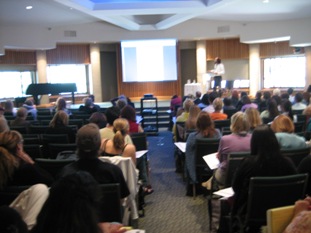
People who are new to astrology usually attend the conferences in order to see some lectures and learn from the presentations. More seasoned astrologers tend to attend conferences in order to meet up with their friends and catch up with one another, and maybe to see a lecture or two. Many of the conferences tend to be geared more towards newer astrologers though, so they provide an excellent learning opportunity, as well as the chance to meet some other astrologers and build some friendships.
Next year is actually going to be a rather busy year for conferences. They can be kind of pricey, so it is best to save up early and register as soon as you can if you plan on attending. If you are a younger astrologer then you can contact us at the Association for Young Astrologers to ask about volunteer and work for trade opportunities. Here are the upcoming conferences (list updated as of July 2011):
- The American Federation of Astrologers Conference in Tempe, Arizona, September 22-24, 2011.
- The United Astrology Conference in New Orleans, Louisiana, May 24-29, 2012.
Those are the main conferences happening over the course of the next year, although I know that there are probably a few others that I will learn of soon. I will try to keep the list updated in the future, although please let me know if you hear of any major conferences that I haven’t listed here.
Conclusions
Well, that’s it. By now you should be well on your way to becoming an astrologer. It may seem like a daunting challenge at first, but with a little bit of patience and dedication you should be delineating charts like a pro in no time. Good luck!


No comments:
Post a Comment